Showing posts with label writing. Show all posts

Friday, September 04, 2026

Always wit, often wisdom, under a heavy cloud: Dorothy Parker

When they told her that the taciturn ex-President Calvin Coolidge was dead, she said, "How could they tell?"

Dorothy Parker never like the monicker or the reputation she had acquired as a "wisecracker," but that is indeed what she was. She was more, however. She was a poet, critic, screenwriter, and political activist, and as a writer she had a major impact on her time and place.

She was also a victim of alcoholism and depression and dealt with these conditions for most of her adult life. She made several attempts at suicide -- most of them thought to be half-hearted -- and went through many broken relationships. Her leftwing politics eventually got her blacklisted from Hollywood.

All the while, she continued to write and crack wise:

You can lead a horticulture, but you can't make her think.
 
Men seldom make passes At girls who wear glasses.
 
If you have any young friends who aspire to become writers, the second greatest favor you can do them is to present them with copies of The Elements of Style. The first greatest, of course, is to shoot them now, while they’re happy.
 
I'd like to have money. And I'd like to be a good writer. These two can come together, and I hope they will, but if that's too adorable, I'd rather have money.
 
I hate writing, I love having written.
 
If you want to know what God thinks of money, just look at the people he gave it to.
 
I don’t care what is written about me so long as it isn’t true.

The fact was that Dorothy Parker was a good writer, maybe even a great one. She received two Academy nominations for her screenplays, and her poetry is still read and honored. She died in 1967, but she is not forgotten. (For more on Parker and other off-kilter writers, check out Andrew Shafer's Literary Rogues: A Scandalous History of Wayward Authors.)


Monday, August 31, 2026

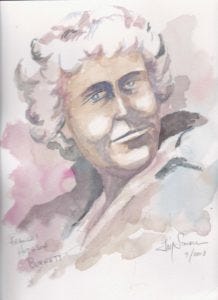
Frances Hodgson Burnett, a rock-star writer of the 19th and early 20th century

When the serialization of Little Lord Fauntleroy was published in 1885, it was so wildly popular that readers waited breathlessly for the next installment and stood in line to buy copies of St. Nicholas magazine in which the episodes appeared. The story set off a fashion trend that eventually became the basis for the Buster Brown clothing line. The episodes were gathered together into book form in 1886 and became an international best-seller; the book was translated into 12 languages.


Frances Hodgson Burnett, another of The Secret Garden and Little Lord Fauntleroy, wrote prolifically and made a ton of money doing it. She traveled extensively, lived peripatetically, spent extravagantly, and maintained a lavish lifestyle that most of us could only imagine.

During her 30 years atop the world’s literary stage, she was one of the world’s most famous women.

Burnett was, indeed, the J.K. Rowling of her day.

We remember Burnett for her children’s books today, but during her time, she also wrote best-selling adult fiction and highly popular stage plays. Little Lord Fauntleroy was turned into the stage play title The Real Little Lord Fauntleroy. Burnett had discovered that an unauthorized version of the book was being produced in a London theater; she then pursued and won a ground-breaking lawsuit for copyright infringement. The play she wrote went on to make as much money as the book did.

Burnett was born in Manchester, England, in 1849, but the family moved to Knoxville, Tennessee, during her teenage year, to be close to an uncle. After the Civil War, however, Knoxville could offer them little in the way of economic opportunity, so Frances took up writing to try to earn an income. She sold her first story to Godey’s Lady Book in 1868 and thereafter worked manically at her writing, often sacrificing her health to keep up a steady income.

Frances married Swan Burnett, a Knoxville neighbor, and they eventually left Knoxville to live in Washington, D.C. There she became famous for the literary salons she hosted on Tuesday evenings, which the rich, famous, and politically powerful attended. She also had two sons on whom she lavished attention. Vivian, the younger son, was the model for Little Lord Fauntleroy. The marriage ended in divorce, as did her second marriage.

There is much more to her life’s story that what I have been able to relate here. She has been the subject of at least two major biographies:

Thwaite, Ann (1991), Waiting for the Party: The Life of Frances Hodgson Burnett, 1849–1924, David R. Godine, ISBN 978-0-87923-790-5

Gerzina, Gretchen (2004), Frances Hodgson Burnett: the unexpected life of the author of The Secret Garden, Rutgers University Press, ISBN 0-8135-3382-1

In 2018, as writer-in-residence, I lived with Burnett and her work for several months as we at the Blount County Public Library decided to issue a new edition of The One I Knew Best of All, Burnett’s autobiographical novel of her childhood. The book is now available here on Amazon.

Monday, August 24, 2026

Antonia Fraser's writing day

 Fortunately for writer and historian Lady Antonia Fraser, she was pronounced as "uppity" when she was a girl attending convent school. The nuns, for some reason she doesn't specify, didn't like her.

They decided to punish by making her spend her Saturday mornings learning to touch type.

"In consequence," she writes, "I’m a touch typist – actually the most useful skill I ever acquired; so much for uppishness."

Fraser walls herself off for three hours in the mornings and writes "ferociously." Then she stops, has lunch, exercises and does other things in the after. In the late afternoon, she edits and revises what she had done in the morning, but it's at a much more languid pace.

The reason that this pattern of work-in-the-morning-only is something so deeply ingrained in me, is that I began trying to write history seriously when I had six children born in 10 years. I have actually written all my life, but history was It. So I devised a way of working like a bat out of hell, or anyway a bat out of the nursery, the moment I could cram the children into cradles, kindergartens, schools ... with the wild hope they would stay there. (There are wicked stories of notices on my door saying “Only come in if you have broken something”, which I utterly deny.) Under the circumstances, I never ever suffered from writer’s block. Source: Antonia Fraser: ‘I was forced to learn typing as a punishment for being uppish’ | Books | The Guardian

All this comes from a brief and delightful description that Fraser gave of her day to The Guardian a couple of years ago. If you are interested in how a good writer writes, you will want to read this.

Fraser is the author of many tomes of history (Mary Queen of Scots, Cromwell The Lord Protector, Marie Antoinette: The Journey, etc.), a couple of memoirs, and a detective series -- among other works. S]Now in her nineties, she still writes and gives her full powers to it.

Tuesday, August 11, 2026

Dominick Dunne on the best writing advice


The best advice on writing was given to me by my first editor, Michael Korda, of Simon and Schuster, while writing my first book. ‘Finish your first draft and then we’ll talk,’ he said. It took me a long time to realize how good the advice was. Even if you write it wrong, write and finish your first draft. Only then, when you have a flawed whole, do you know what you have to fix.

Dominick Dunne

Sunday, August 09, 2026

A visit with some old "friends"

 I am taking this late summer period to visit some old friends and to try to find some new ones. Author friends, I mean. I am returning to some authors I have read before and reading some of the publications that I have missed. One of those old "friends" is Walter Mosley, a writer of extraordinary talent and range. I had read several of his Easy Rawlins mysteries and just finished his first Joe King Oliver book. 

Mosley's writing drives straight into the action and holds you there until he is finished with you. So much of what I read these days is filler material — descriptions and items peripheral to the plot. Mosley doesn't write like that. His work puts you in the middle of the action and manages to keep you there even when he's spinning out a back story. Good stuff and highly recommended.

Saturday, December 12, 2009

A new edition of Fowler

Early in my academic writing career, I met Fowler.

I was putting together the first edition of Writing for the Mass Media and was looking for some basic writing references and somehow -- I don't remember how -- came upon Fowler. It was, the parlance of that day, the real thing.

Fowler is an "it," as well as a "he."

He is Henry Fowler. It is A Dictionary of Modern English Usage, or as Jim Holt notes in his essay in the New York Times, "among its devotees it is known, reverentially, as 'Fowler.' ”

Holt tells the interesting story of how Fowler became "Fowler." Henry Fowler was a former school teacher and amateur wordsmith who lived on the island of Guernsey with his younger brother Frank. In the first decade of the 20th century, Henry and Frank published a book titled The King's English, which, despite their amateur status, was a great success. They took on the editing of The Concise Oxford Dictionary and then planned a larger book on the language, but World War I occurred. Frank died of tuberculosis, and Henry barely survived a bout of illness, But when he did, he took up the project that he and his brother had envisioned.

As Holt relates in his essay:
The book was published in 1926, to immediate acclaim and brisk sales. Although language, as the truism goes, is an ever changing Heraclitean river, Fowler was not revised until 1965, when Sir Ernest Gowers gave it a light going-over, preserving both the spirit and the substance of the original. (The same cannot be said of the 1996 third edition, heavily reworked by R. W. Burchfield.) Now Oxford University Press has reissued the classic first edition of A Dictionary of Modern English Usage ($29.95), with an acute new introduction by the linguist David Crystal. It is a volume that everyone who aspires to a better command of English should possess and consult — sparingly. (emphasis mine)
Sparingly, as Holt points out in the rest of his essay, is the key.

You can't take Fowler too seriously because, for one, Fowler doesn't take himself too seriously. The language should be whatever is useful and not laden with a lot of half-wit rules (such as never splitting an infinitive).

The dictionary isn't a dictionary of definitions but rather a collection of short essays on the language. Most of them are short, thought-provoking, delightful and informative.

Fowler/'Fowler' has been a good friend for a quarter of a century, and it's good to know that there is another edition for the next generation.

Monday, October 12, 2009

The Intersection of Journalism and Fiction

The Ossoli Circle -- one of the oldest women's clubs in the South -- has asked me to speak today.

The invitation came because of the mystery novel, Kill the Quarterback, which was published last year. The following is a text of some of what I plan to say:

When people ask what Kill the Quarterback is about, I have a ready answer. “It’s not about football.”

The story is about a police reporter in Nashville who covers the investigation into the murder of a star quarterback. The reporter, Mitch Sawyer, finds out things about the murder that the police do not know. Mitch has friends on the police force, but he also has enemies. One of those enemies is the guy who heads the muder investigation.

So, Mitch – an independent cus – doesn’t tell what he knows.

Besides, Mitch thinks the police should do their own investigating. He doesn’t feel the need to help them out.

Mitch gets more deeply involved in all this, and he finds a far more complicated story than what he had imagined. And he finds this story hitting close to home.

Eventually, Mitch becomes a target of the murderer. And thereby hangs the tale.


I have taught journalism and writing for more than 30 years. I am fortunate enough to have a textbook on writing that has been in print for 25 years and is now in its seventh edition. I am former newspaper reporter and magazine staff member.

So why write fiction?

First, I think stories are important. Whether they are fiction or journalism, the stories that we tell each other have a great deal to do with who we are, what kind of a society we have and what kind of a life we lead.

  • Our religious beliefs are based on stories.

  • Our history – and our ideas about how we got to this point – are based stories.

  • Our view of the world around is based on narratives – the narrative of Barack Obama, the narrative of September 11, the narrative of Tennessee football. Our thinking about all of these things is conditioned by the stories that we hear about them.

All this is journalism.

But our fiction is also an important factor in the way we view the world. We may look at fiction as just entertainment, but I think it is far more than that – that it has a much higher purpose.

Fiction is a powerful part of the culture, and our ideas about who we are and what the world is like come through our fiction.

That’s why I have turned to fiction, at least briefly. I want to use whatever modest gifts I have for writing to tell stories.


Besides, there are many similarities between journalism and fiction. I know a statement like that invites many acerbic and waggish comments about too much journalism really is fiction.

But, of course, I’m talking about something that goes beyond the daily news reports and how accurate we think they are.

One of the things I teach students is that all good media writing exhibits four characteristics:
-- accuracy
-- clarity
-- precision
-- efficiency
(explain)

In journalism, we try to descibe the world we see as accurately as possible. Journalists take great pains to make sure their facts are right. They quote people correctly. They check and re-check their information. While they do not always succeed in this difficult task, they try as part of their professional responsibilities.

I would suggest to you that fiction writers do the same thing. They try to describe the world as accurately as possible. Only, the world they are describing is one of their own making – or one of the readers’ expectations. Fiction writers have to be true to this world just as journalists have to be true to the world they are in.

Yes, you might say, but a fiction writer can just make things up.

That is true to some limited extent. Let me give you a somewhat silly example of what I am saying:

Let’s say you’re writing a Superman story. Part of the story has a busload of kindergarten children careening off a cliff. Well, this is a Superman story, so what has to happen?

That’s right. Superman has to save the children. If he didn’t, he wouldn’t be Superman, and this wouldn’t be a Superman story. The writer who didn’t let this happen wouldn’t be true to the world in which Superman operates.

Likewise, the mystery writer – something I aspired to be in writing Kill the Quarterback – has to live up to readers’ expectations about the genre.

• The mystery has to be solved.

• The major dilemmas have to be resolved.

• Clues about the killer should be left out in the open.

• Good has to triumph – to some extent – over evil.

And this has to be done through the natural order of things in the world that the writer has made. The writer can use coincidence to get his characters into trouble, but he or she cannot use coincidence to resolve the big dilemmas or the story itself.

These are some of the rules. Some are based on the common practices of mystery writers. Some are the expectations of the readers.

Plotting a good mystery novel – and staying true to the world of the genre – is a challenge. It’s fun, but it is definitely a challenge.

Personally, I find plotting far harder than the writing itself. Tracing the arc of the story so that the protagonist gets from the beginning to the end is something I struggle with. It would be much easier if I didn’t have to follow the rules – if I didn’t have to be true to the world in which the story is set. If, in other words, I could just make it up.


Any writer asks two things of a reader:

• the reader’s time and attention

• a suspension of disbelief – that is, acceptance on the part of the reader that the place where you are going is a world created by the writer.


The reader must be willing to make this investment.

The writer, on the other hand, must understand that this investment on the part of the reader is limited.

The writer’s first job is to be true and faithful:

• true to the world the writer has created

• faithful to the generally accepted rules of that world

But the writer must then open up that world to the reader in a way that is entertaining, enlightening and informative.

The central responsibility of the writer, I think, is to give the reader an accurate portrayal of the world that he or she is describing. That is the service the writer performs.

And that responsibility does not change whether one is writing fiction or journalism.


Tuesday, October 06, 2009

Writing for the web: guidelines for an introductory writing class

The following are some notes I have made for a discussion I am having with the JEM 200 writing instructors about what we are teaching concerning writing for the web. I invite your comments.

As we move from writing in print mode to writing for the web, here are some general principles that we should keep in mind:

  • The writing should be tighter – more concise.

  • Writers should use words and phrases that are information rich.

  • Writing should be shorter but with no loss of information.

  • Writers must learn to write quickly and with confidence.

We need to explore in some depth what each of these principles mean with our students. I admit that we haven’t gotten them all figured out yet, but all of us have ideas about them that we should share.

For instance, what are words and phrases that are information rich? Well, I know one that isn’t: “There is.” We should avoid those kinds of constructions. Maybe you know of others.

Possibly one way to think of information rich is to think of the Ws: who, what, when and where. If the words we use don’t convey something about those, we probably shouldn’t be using them.

But I digress.

Here are some specific guidelines that I want us to discuss at our meeting on Friday:

-- No story should be more than 200 words unless there is a compelling reason for it.

-- Summaries should be a maximum of 35 words.

-- Headlines should be a maximum of eight words. They should be abstracted sentences. That is, they must contain a subject and a verb and be as specific as possible. No puns, no play-on-words. Use alliteration only when it makes sense. In the words of Jakob Nielsen, they should be “pearls of clarity.”

-- Use lists when appropriate. Teach your students how to create lists. Check out what I say about lists in the third lecture on writing for the web.

-- Paragraphs should be a maximum of two sentences and 50 words.

-- Only one direct quotation per story. Direct quotations generally do not pull their informational weight. They add a bit of color and character to the story, but that’s about it.

-- Every story should contain at least one in-line link to additional information. The link should be constructed in a way so that the reader will have a good idea as to where the link goes. Check out this article on linking on JPROF. Teach your students how to set up a link in HTML.

-- Teach the concept of key words. Students should identify key words and put the tag around them.

The goals of our writing should be to deliver as much information to the readers as quickly as possible. Send the readers on their way satisfied, and they will return.

Saturday, January 10, 2009

Writing for Twitter - good journalism in 140 characters


When a dam that held millions of cubic yards of toxic coalash near Harriman, Tenn., broke a few days before Christmas 2008, no one paid much attention other than those immediately affected by it and the local media. The disaster was epic -- compared to the Exxon Valdez oil spill in Alaska in 1989.

But it was Christmas and the country was in the throes of an economic crisis and the transition of a new president. And no one was killed.

But a few people were paying attention, and that made a difference. Amy Gahran, an independent media consultant in Boulder, Colo., and editor of the group blog E-Media Tidbits for Poynter.org, wondered what was going on. She's also a member of the Society of Environmental Journalists. Two days after the disaster, she wrote this for Poynter:

When I first learned of this disaster from SEJ colleagues by e-mail this morning (, I immediately launched the Twitter hashtag #coalash. Off and on today I've been posting links to news, context, background, opinion, resources, maps, and multimedia related to this unfolding story. Even EPA's Web manager, Jeffrey Levine, was tweeting relevant EPA maps and facility info.

Other Twitter users, including several Tenn.-area news orgs, adopted the hashtag. This made it easier for people to find and follow their coverage. Using a hashtag provides a broader view that includes local news coverage and extends beyond it. At the same time, a hashtag can amplify the reach of local stories. Online, this reach becomes especially crucial in the absence of delayed or absent mainstream national news coverage.


Once the buzz started on Twitter -- and came together through Gahran's hashtag -- news media from outside the East Tennessee area began paying attention and the story began to garner the international attention it deserved.

This story, and many others like it, amply demonstrate the power of Twitter as a journalistic device.

Once thought to be nothing more than an interpersonal communications trivial pursuit, Twitter has become an important information tool that can help journalists gather information and can also provide a means of distributing journalism to an interested audience.


What is Twitter

Twitter is a way an individual can connect with people who share the same interests and inclinations. An individual registers for an account on Twitter.com and selects a username. The individual can provide other information for a profile, but this is optional. The key thing is that the individual begins to contribute what, in Twitterland, are called "tweets."

In addition to the tweets, the individual can also begin to "follow" other users of Twitter; that is, the person finds other persons and begins to get a list of their tweets on his or her Twitter page.

As an individual contributes more tweets, he or she will attract "followers." These can start with friends and family, but if the tweets are at all interesting, follwers will show up whom the individual does not know.

This is just the beginning. There are many other aspects to Twitter, many of them outlined in this excellent article by Ellyn Angelotti.

But the big factor in Twitter is brevity. You have only 140 characters (letters, punctuation and spaces) to say what you have to say. That's usually between 10 and 15 words.


Writing a Tweet

Once you are on Twitter and are following a few people, read a page or two of tweets. You will get a sense of what is there and how people use it. You will be attracted, repelled, fascinated, confused -- and possibly even appalled. Remember that when you write a tweet, the people following you may have those same reactions, so begin deciding right away what kind of personality you want to form.

As a journalist writing for Twitter, you are trying to inform the people who are following you. But, remember too that as one of twitters, you are part of an ongoing conversation, and you should feel free to react to what others have said as well as introducing original information into the conversation.

Here are some things to think about and some guidelines:
  • What's the point? Why are you posting? Have a goal in mind. Understand how you want people to feel when they have read you post.

  • Information is more important, and interesting, than opinion.

  • One or two points (of information, opinion, whatever) max. Not three. You'll quickly use up your space.

  • Think: subjects and verbs. Complete sentences are not always necessary, but complete thoughts are.

  • Emphasize verbs. Active, descriptive verbs. It's one of the basic truths of good writing.

  • As in headline writing, "to be" verbs can be understood rather than written.

  • Drop articles (a, an and the) unless they are necessary for clarity.

  • Punctuate for clarity, not necessarily just to follow the rules.

  • Same thing goes for AP style. Often AP style rules will help with brevity, but sometimes they don't.

  • Use abbreviations only if you are sure your audience will immediately understand them. Don't use them just to show that you're hip to techno lingo.

  • Don't be afraid to direct your tweets to individual users. Done correctly, this can help build your audience.

  • Maintain a sense of professionalism. Using profanity and scatological language may give you a sense of coolness about yourself, but it's also likely to lose you followers. (On the day I wrote this, I stopped following an acquaintance for just this reason.)

  • Ask and ye shall receive. One of the great things about Twitter (and the web in general) is that there are people ready to respond, particularly if what you want is reasonable and interesting. A well-formed question will attract responses and followers.

  • Respect. Respect the language, your audience and yourself. Honesty, courtesy, modesty and civility are values in the Twitter society. Strive for them.
These are guidelines, not rules. They are mean to help you get started, not to lock you into a certain style or convention. Once you are on Twitter and a participant in the conversation, you can decide who you want to be and how you can use Twitter to be effective.


Continue reading:

Amy Gahran: Twitter Basics for Journalists & Recovering Journos
Step-by-step -- getting onto Twitter and making the most of it, from a major league Twitterer.

Terrance Ward: Using Hashtags for Organization in Twitter: Options for Making Microblogging Posts Ready for Viral Retweeting | January 5, 2009 | A hashtag is a word or phrase preceded by the pound sign (#). Twitter, the pioneer microblogging service, saw its visitors quintuple in 2008. With so many more posts (or “tweets,” as they’re called on the site) being made, users are developing ways to organize and track the information meaningfully.

Craig Stoltz: How Twitter Finally Taught Me to be an Editor | Web2.0h...Really? | May 27, 2008 Fact is, it’s tough to convey any substance in 140 characters. You have to carefully weigh every word, letter and space. Even punctuation.

Margarent Mason: Writing My Twitter Etiquette Article: 14 Ways to Use Twitter Politely | The Morning News | August 15, 2008 Some good thoughts about how to use Twitter appropriately by Margaret Mason.

Ellyn Angelotti: JournoTweeting | Poynter Institute | This excellent article by Ellyn Angelotti takes you through Twitter step by step and then tells you how a journalist should be using it. Lots of links and good advice

Friday, December 12, 2008

Re-thinking the old media forms

Yes, you can do the old forms on the web. But should you?

This "old media" type says we should re-think the forms of our content. This New York Times article by Virginia Heffernan is bit depressing but very perceptive.

She writes:

. . .they should think about what content suits these new modes of distribution and could evolve in tandem with them. For old-media types, mental flexibility could be the No. 1 happiness secret we have been missing.

Tuesday, November 18, 2008

Non-profit news: the new journalism


The New York Times has an article this morning on non-profit journalism -- an idea that has been around for a while. In fact, the Christian Science Monitor had a similar article, spotlighting the VoiceofSanDiego as the Times article did, back in February.

There are also articles in the Columbia Journalism Review, American Journalism Review, and elsewhere.

The basic idea is that a foundation or wealthy, public spirited individual puts up the money to fund journalistic efforts of one type or another. Sometimes, as the Times article points out, these efforts are locally based as in San Diego, Minnesota, Chicago and St. Louis.

Sometimes they are national, such as ProPublica or the Center for Investigative Reporting.

These organizations are most likely to use the web for the publishing and distribution of their products.

There are legitimate independence issues that can be raised about these efforts. What are the motivations of those who put up the money? Do they try to influence the journalism that is being produced?

But the fact that these questions can be raised do not make these efforts or organizations unworthy. Far from it. They can offer a valuable service to the public in an age when traditional media are abandoning their journalistic roles. They can offer outlets and employment, even if it is only temporary, to budding young journalists who understand the web and social networking far more intuitively some older folk.

In fact, ultimately the strength and staying power of these non-profit organizations will be in the people they hire rather than the journalism they produce. That's an idea that I want to develop in a later post.

Saturday, September 27, 2008

The Writing Wright: now available on Amazon

  • Tom Clancy, Ernest Hemingway, Mark Twain and Satchel Paige -- they were all writers (of sorts). And they have all made it into this first volume of The Writing Wright.
The Writing Wright is now available on Amazon.

If you are fascinated by writers and writing, The Writing Wright offers a box of chocolates you can’t refuse. The book sprinkled quotations and stories from many writers along with my own insight, instruction and commentary. Here you’ll find:

• Mark Twain’s critique of the writing for James Fenimore Cooper

• Ernest Hemingway’s attitude toward punctuation

• How expensive a misspelling can be

• Down-to-earth instruction on the glue of writing

• When Tom Clancy learned about submarines

• What Satchel Paige said about braggin’

• What H.L. Mencken thought about being a reporter


And much more.

The book contains many of my own illustrations. My hope for The Writing Wright is that it will draw you in and teach you something about writing – lessons you can learn over and over.

The price is $10.