Saturday, September 27, 2008

The Writing Wright: now available on Amazon

  • Tom Clancy, Ernest Hemingway, Mark Twain and Satchel Paige -- they were all writers (of sorts). And they have all made it into this first volume of The Writing Wright.
The Writing Wright is now available on Amazon.

If you are fascinated by writers and writing, The Writing Wright offers a box of chocolates you can’t refuse. The book sprinkled quotations and stories from many writers along with my own insight, instruction and commentary. Here you’ll find:

Mark Twain’s critique of the writing for James Fenimore Cooper

Ernest Hemingway’s attitude toward punctuation

• How expensive a misspelling can be

• Down-to-earth instruction on the glue of writing

• When Tom Clancy learned about submarines

• What Satchel Paige said about braggin’

• What H.L. Mencken thought about being a reporter


And much more.

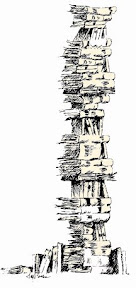
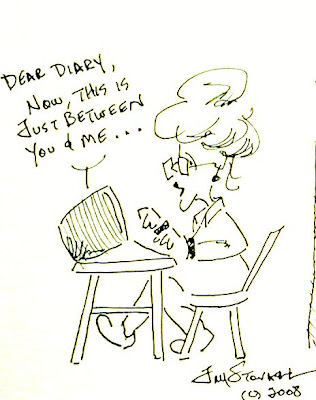
The book contains many of my own illustrations. My hope for The Writing Wright is that it will draw you in and teach you something about writing – lessons you can learn over and over.

The price is $10.

Thursday, September 25, 2008

The Writing Wright's fan page on Facebook


Just created a fan page for The Writing Wright on Facebook.

The Writing Wright is a book of essays, quotations and snippets about writing, the language, journalism and the writing life. The book is illustrated with the author's pen and ink drawings.

Doing the fan page once wasn't too hard. I'm sure when I do it again, it will be even simpler.

I loaded a few of the drawings that are in the book into the first photo album, and I'm going to take some screen shots of a few of the pages and put them in another album. I also wrote on the Wall and started a discussion thread.

Before long, I'll figure out how to invite folks to become a fan. Probably won't do that until ordering info comes through from Amazon.

Meanwhile, you can head over that way and see what's up.

Wednesday, September 24, 2008

Where's Sarah? Wall Street elbows her out

• Sarah Palin is no longer the focus of the rabid attention of the news media herd. Why is that?


Interesting that only a couple of weeks ago, the news media were 24/7 about Sarah Palin, the fighting hockey mom who could stare down the Ruskies.

But the last few days all we have heard from her is about her emails being hacked and a little dust-up with reporters when she went to talk nice to foreign leaders at the UN.

Has anyone asked her for an opinion about the economy or the Wall Street meltdown? Does anyone (even Republicans whose retirement plans are in jeopardy) really want to know?

What's happening these days is serious business.

Sarah Palin seems to be suddenly irrelevant.

Monday, September 22, 2008

Blogging the course - what's fair?

This one hits disturbingly close to home.

A New York University student has written a scathing report about her current course "Reporting Gen Y" and has included criticisms of the professor. The student said the prof was not up to speed on social media and podcasting and taught the course with an outdated mindset.

It didn't take long for the student's report to make its way out into the web.

Ouch!

Mark Glaser at MediaShift has an account of the controversy with some follow-up with the director of the school.

Is it fair for a student to write about a class and its prof and fellow students? Should the writer let everybody know that he or she is doing it or should it be done undercover?

Tuesday, September 16, 2008

All editors want the same things -- and they're not getting them

Lynn Worsham writes a brief, excellent article in this week's Chronicle of Higher Education on the main complaints scholarly journal editors have about working with authors. Worsham is editor of JAC, a quarterly journal of rhetoric, writing, culture and politics.

Many of the complaints she describes are echoed by editors in other realms:

  • Inappropriate submissions because writers are not familiar with the journal, its purpose and its audience.

  • Sloppy manuscripts. Grammar and spelling errors.

  • Failure to follow the journal's submission guidelines.

  • Bad attitudes about editing and revision -- and, most of all, about rejections.

Editors everywhere -- inside and outside academe -- would agree.


Read more about journalism and issues facing the profession at JPROF.com.